-
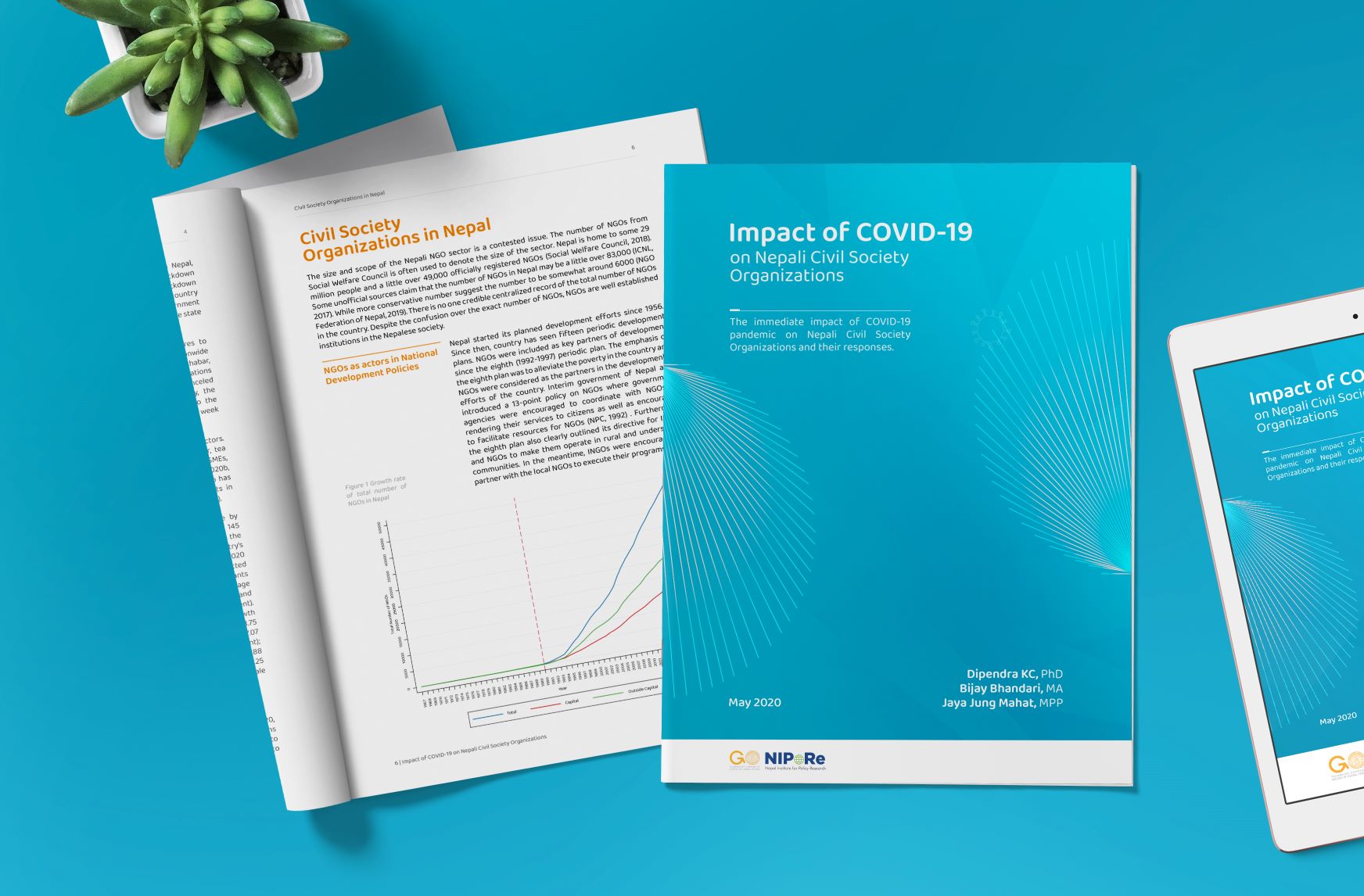
Impact of COVID-19 on Nepali CSOs
In April 2020, a nationwide study was initiated to assess the impact of COVID-19 on the capabilities of Civil Society Organizations (CSOs) in Nepal. Out of 488 invited, 235 organizations from various sectors participated, including NGOs, federations, and profit not distributing companies, representing diverse functional areas across all provinces.
-
COVID-19 and Nepalese Civil Society Organizations: Impact, Responses, and Opportunities
The study highlights the significant impact of COVID-19 on Nepali civil society organizations (CSOs), with 87% reporting reduced service delivery capabilities. New registrations declined by 89%, and many organizations faced funding challenges and concerns about layoffs. Despite struggles, CSOs mobilized significant resources, contributing around USD 30 million during the pandemic.
-
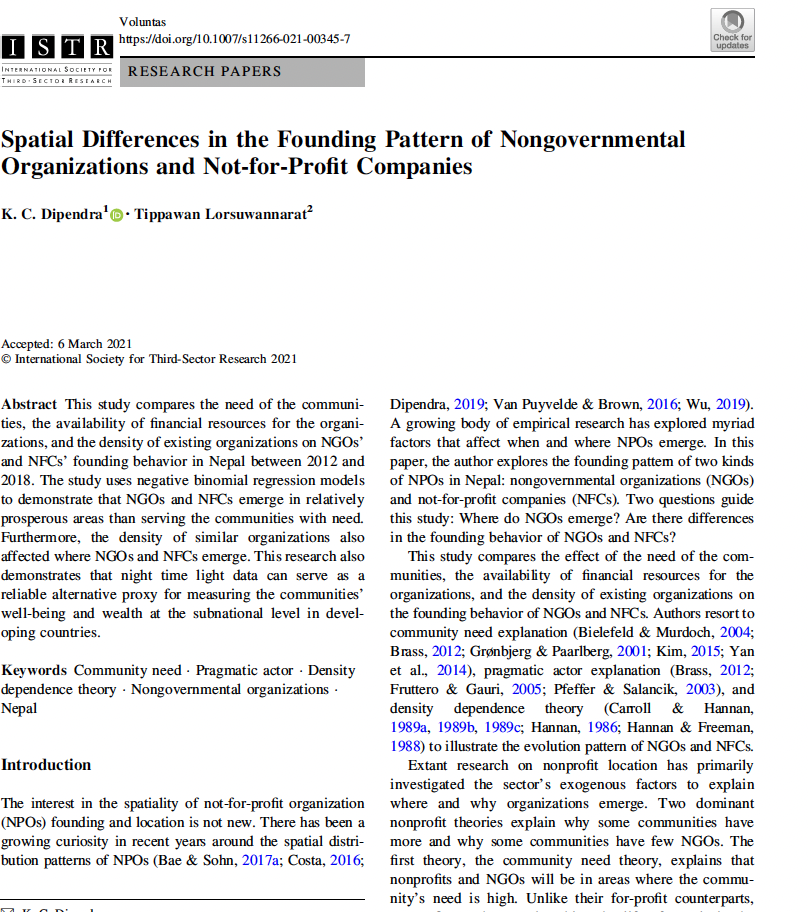
Spatial Differences in the Founding Pattern of Nongovernmental Organizations and Not-for-Profit Companies
This study analyzes the founding behavior of NGOs and NFCs in Nepal from 2012 to 2018, highlighting that they are more likely to establish in prosperous areas rather than those in need. Additionally, it finds that the density of existing organizations influences their emergence, and nighttime light data is a useful proxy for assessing community…
-

Sweeping (away) generalisations
The skepticism towards NGOs in Nepal reflects a broader mistrust rooted in public rhetoric, exacerbated by misinterpretations of statistics. Despite criticism, NGOs contribute significantly to civil society, and sweeping generalizations hinder understanding. It’s crucial to recognize their positive impact amidst accountability issues and increasing governmental scrutiny, highlighting a need for nuanced perspectives.
-

Determinants of internal organizational governance practices: Evidence from civil society organizations in Thailand
This research examined factors impacting internal governance in CSOs in Thailand. A survey of 54 CSOs revealed that board size positively influences governance effectiveness, while closer ties to government negatively affect it. Additionally, a strong perception of legislative clarity significantly enhances governance practices within these organizations.

KC Commons