-
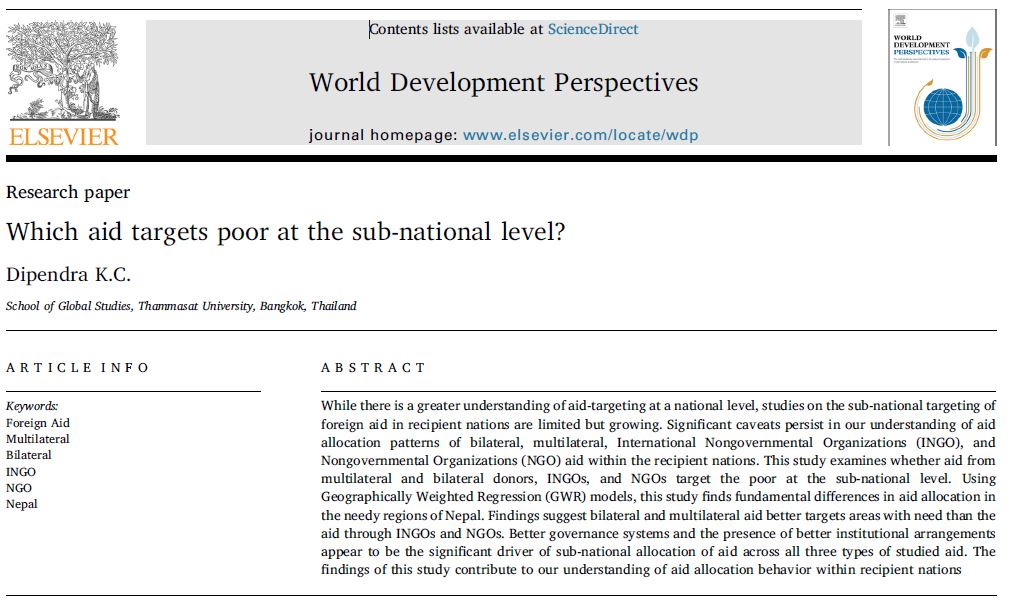
Which aid targets the poor at the sub-national level?
This study investigates sub-national targeting of foreign aid in Nepal, highlighting differences in allocation among bilateral, multilateral, INGO, and NGO aid. Using Geographically Weighted Regression models, it concludes that bilateral and multilateral aid more effectively reaches needy areas, with governance and institutional arrangements significantly influencing aid distribution.
-
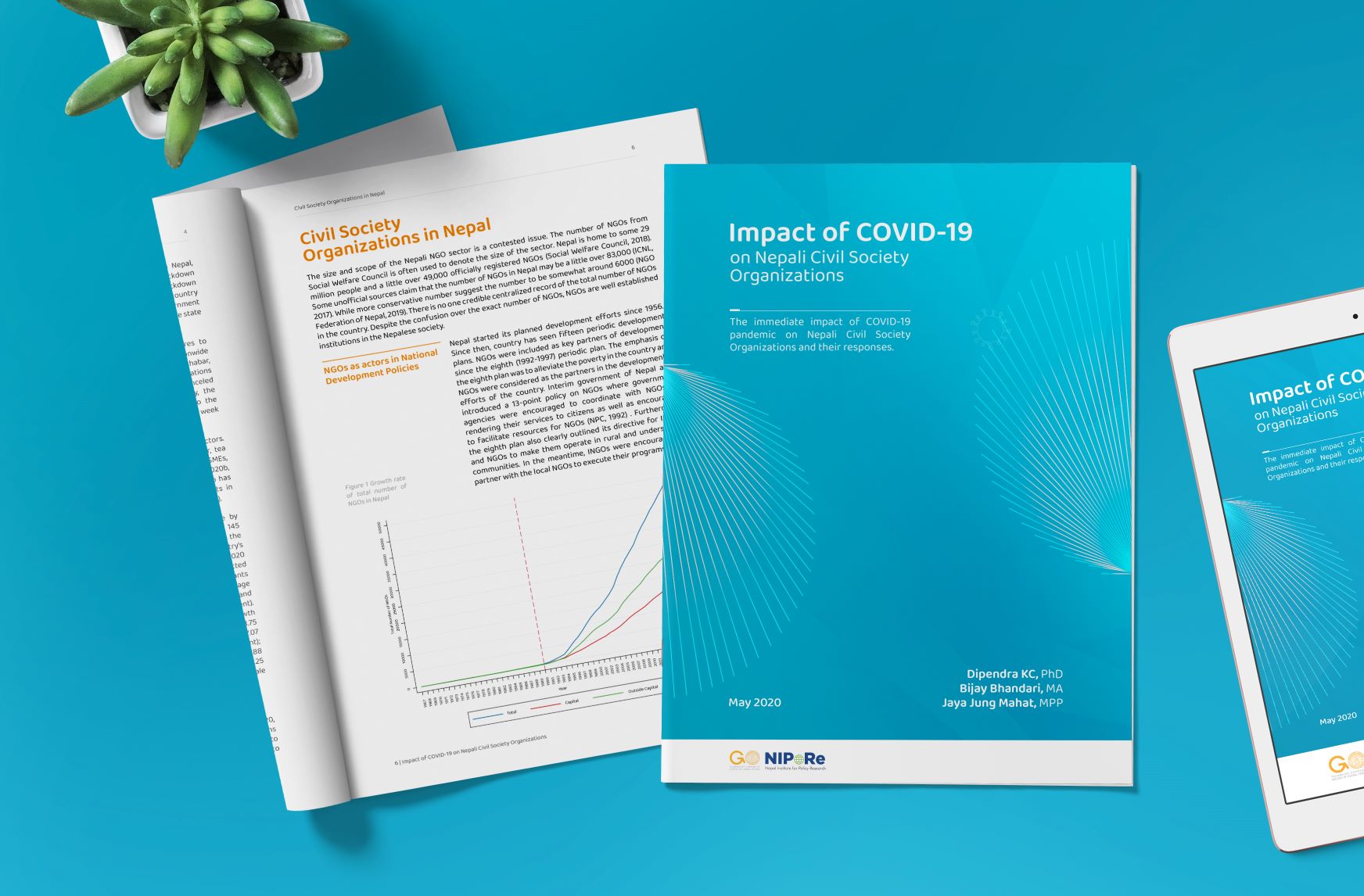
Impact of COVID-19 on Nepali CSOs
In April 2020, a nationwide study was initiated to assess the impact of COVID-19 on the capabilities of Civil Society Organizations (CSOs) in Nepal. Out of 488 invited, 235 organizations from various sectors participated, including NGOs, federations, and profit not distributing companies, representing diverse functional areas across all provinces.
-
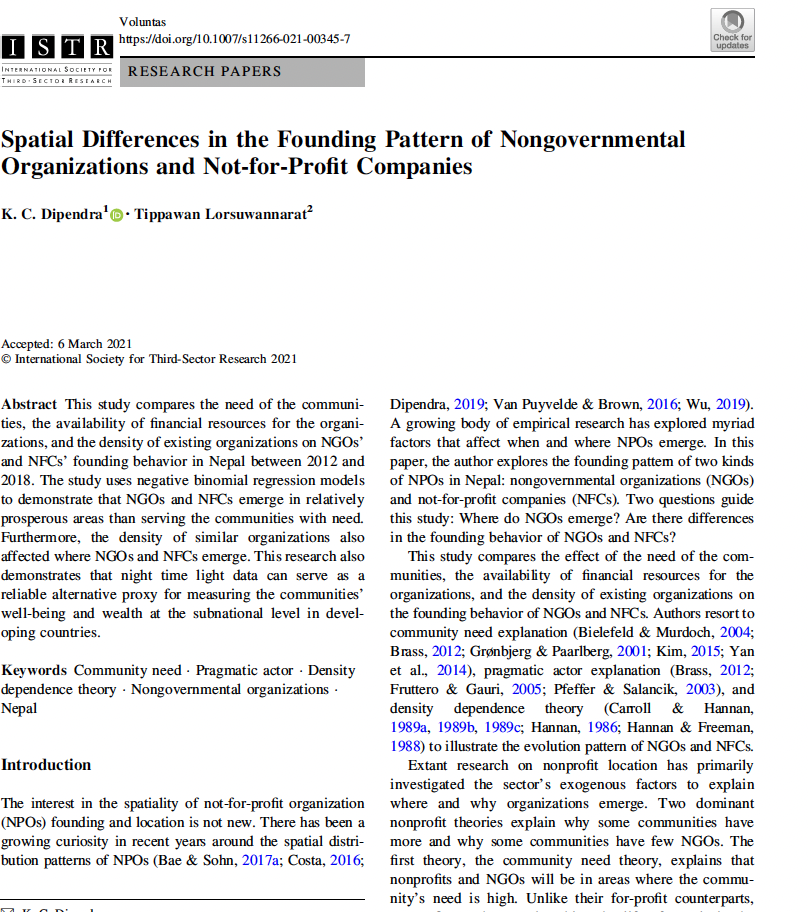
Spatial Differences in the Founding Pattern of Nongovernmental Organizations and Not-for-Profit Companies
This study analyzes the founding behavior of NGOs and NFCs in Nepal from 2012 to 2018, highlighting that they are more likely to establish in prosperous areas rather than those in need. Additionally, it finds that the density of existing organizations influences their emergence, and nighttime light data is a useful proxy for assessing community…
-
Sweeping (away) generalisations
The skepticism towards NGOs in Nepal reflects a broader mistrust rooted in public rhetoric, exacerbated by misinterpretations of statistics. Despite criticism, NGOs contribute significantly to civil society, and sweeping generalizations hinder understanding. It’s crucial to recognize their positive impact amidst accountability issues and increasing governmental scrutiny, highlighting a need for nuanced perspectives.

KC Commons